
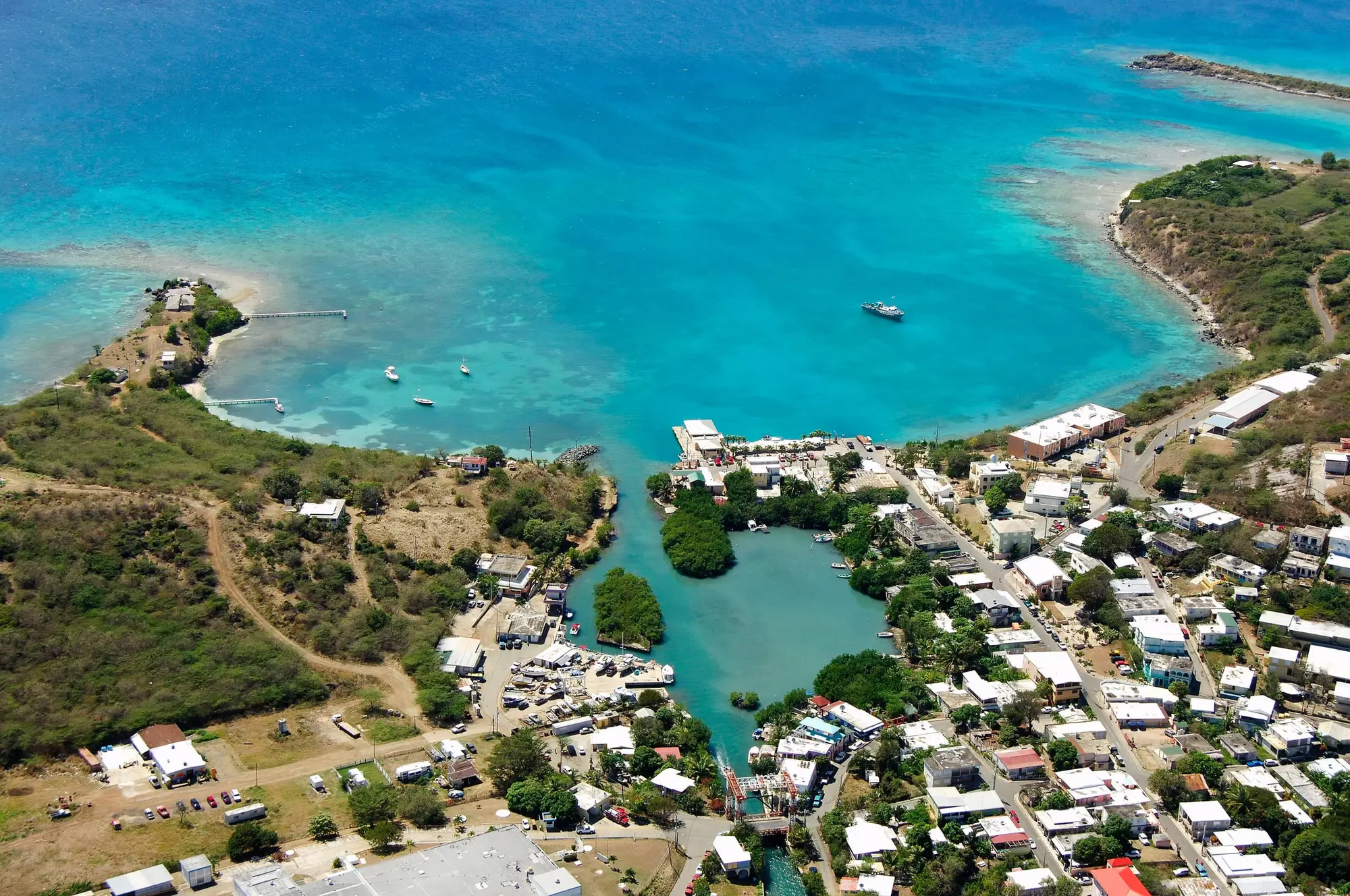

Pick Vieques if the bio bay is on your list. Pick Culebra if Flamenco Beach is. That settles it for most people, because each island has the one thing the other does not: Mosquito Bay, the brightest bioluminescent bay in the world, is on Vieques, and Culebra has no bio bay at all. Flamenco, regularly ranked among the best beaches in the world, is on Culebra.
On a trip of under a week, do not try to do both. There is no ferry between them, and the only public route runs back through Ceiba on the main island.
Side by side
| Vieques | Culebra | |
|---|---|---|
| Size | About 52 square miles | About 10 square miles |
| Ferry from Ceiba | 1 hour | 1 hour 30 minutes |
| Fare today | $2.00 | $2.25, plus a $2 fee |
| Weekday sailings each way | 8 | 7 |
| Weekend sailings each way | 6 | 7 |
| Last boat back | 9:30 PM | 9:30 PM |
| Flight from SJU | Cape Air, 25 minutes | Cape Air, 20 minutes |
| You get around by | Jeep | Golf cart |
| The one thing | Mosquito Bay | Flamenco Beach |
| Where you stay | Esperanza or Isabel Segunda | Around Ensenada Honda |
Sizes are the tourism board’s; crossing times are the ferry operator’s own; the sailings are from its August to November 2026 timetable. The Culebra fee is charged on top of the fare when you buy the ticket, and the fare rise due on 31 December applies to both islands equally.
Choose Vieques if
The bio bay matters. Mosquito Bay holds the Guinness record for the brightest bioluminescent bay in the world, and it is the one thing on either island with no substitute. You see it by kayak, clear canoe or electric boat, on a night near the new moon. The Mosquito Bay page has the dates and the tours that leave from the island.
You want room to explore. Vieques is about 21 miles long, and more than half of it is the Vieques National Wildlife Refuge: beaches such as La Chiva and Playa Caracas, with free entry and few people on most of them. A jeep or another high-clearance vehicle is the usual rental, and the refuge’s rules come with it. The Fish and Wildlife Service states that “a major portion of the eastern wildlife refuge is closed to the public due to the danger of unexploded ordnance and the associated clean-up process,” and the closed areas may not be entered by land or sea. What is open in the refuge has the detail.
You want a choice of town. Esperanza on the south coast has the malecón, most of the restaurants and the bio bay meeting points; Isabel Segunda on the north coast has the ferry. Vieques has more places to stay than Culebra, and more kinds.
Choose Culebra if
Flamenco is the reason. A mile of white sand in a horseshoe bay, calm enough most of the year that the tourism board calls it ideal for small children. It faces north, and from November to April winter swells can bring rip currents. It is at its best early and late, which is the argument for a night on the island rather than a day. The Flamenco Beach page has the fees, the campground and the tanks.
You want to snorkel. Culebra’s southwest coast is a permanent no-fishing reserve, and its best-known spots, Tamarindo for turtles and Melones for coral, are walk-in from the sand. A dive shop across from the ferry rents masks by the day. Snorkeling on both islands sorts the spots and the boats.
You want small. About 10 square miles, one town, and nearly everything clustered around Ensenada Honda: the ferry, the airport, the restaurants and most of the beds. A golf cart covers the distances people actually drive. Culebrita, the cay with the lighthouse, is a water taxi away.
Why not both
Puerto Rico Ferry sells three routes, San Juan to Cataño, Ceiba to Vieques and Ceiba to Culebra, and nothing between the islands. On the weekday timetable, Vieques to Culebra through Ceiba is about four hours door to door to cover nine miles, on two separate tickets with no connection guaranteed. Vieques to Culebra has the arithmetic, the flights and the private-boat option.
With a week or more, it can be worth it: take a Vieques Air Link flight between them if its routing suits, or give the transfer day to a slow morning and a midday boat. With less, the day you spend in terminals is a day taken from the island you chose.
With one day, from San Juan
Both work as a day, with different catches.
- Culebra in a day is a beach day. The ferry gives you about five hours on Flamenco on a weekday, in the busiest part of it, or a Fajardo catamaran takes you to a beach of the captain’s choosing. The Culebra day trip sets the two side by side.
- Vieques in a day is a bio bay night. It works on the first tour of the evening and the 9:30 PM ferry back, best in the winter months. Mosquito Bay from San Juan has the operators that will take you and the ones that will not.
With children
Both islands suit families, for different reasons. On Culebra, Flamenco is the calm, shallow answer outside the winter swell days, and the campground makes it an adventure. On Vieques, Sun Bay and Playa Caracas are the family beaches, and the bio bay is the highlight a child remembers. The clear-canoe trip is run for all ages and experience levels, and the electric boat takes all ages with no paddling. Children from age 3 can ride, with a parent or guardian, on horseback at Playa Negra, the black sand beach west of Esperanza. Adults-only hotels exist on Vieques, El Blok among them, so check the age policy before you book.
Once you have chosen
Book the ferry first, then the bed, then the bio bay night if it is Vieques. Where to stay covers both islands by town, and getting around has who rents the jeeps and golf carts, and where.
If Vieques is the pick, the Vieques listing below is everything bookable on the island. Check where each trip leaves from before you book: some start on Vieques, and some are day trips from the main island.
