
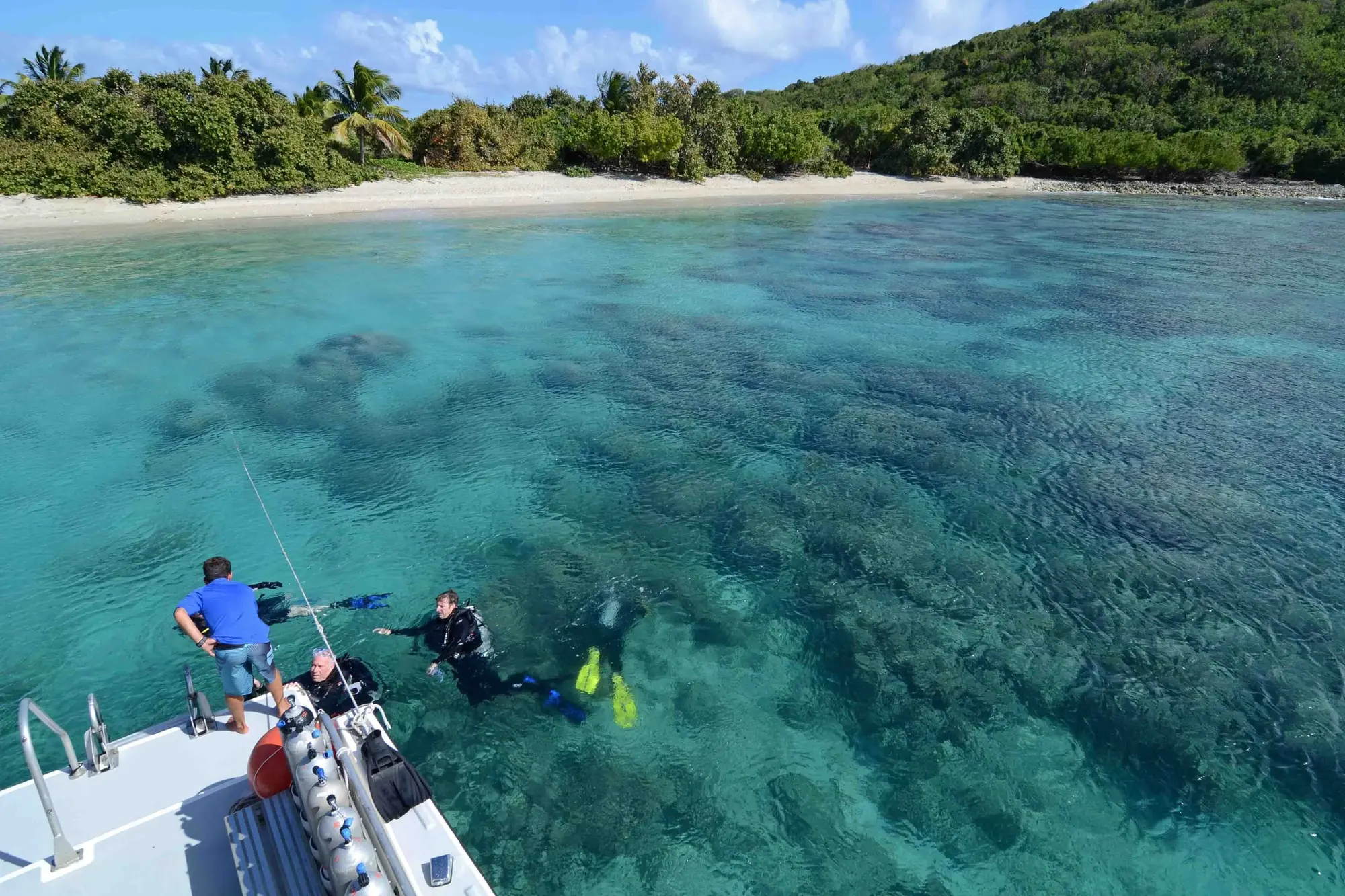

Culebra is the better snorkeling island. It has a marine reserve along its southwest coast, turtles you can reach from the sand, and a dive shop across from the ferry in Dewey that rents masks by the day. Walk in at Tamarindo for turtles or Melones for coral. Vieques has La Chiva, the best snorkeling from any beach on the island, inside the wildlife refuge, plus easy beaches in Esperanza and the two snorkel trips we link below, which leave from the island itself.
What matters as much as where you swim is where the boat leaves from. A great deal of what is sold as a Culebra snorkel day departs from Fajardo on the main island, and that decides your whole morning.
Culebra from the shore
Culebra Divers, the dive shop directly across from the ferry terminal in Dewey, rents gear without a reservation and marks a map for you. The shore spots it sends people to:
| Spot | What it is for |
|---|---|
| Tamarindo | Turtles and rays. The shop’s words: your “BEST chance to see the turtles” |
| Melones | Coral and fish |
| Punta Soldado | A good all-round site |
| Flamenco | The rocky ends, not the middle |
Tamarindo is the one people come for. The tourism board describes it as rocky, with views across to Cayo Luis Peña, and “a good chance you’ll encounter some sea turtles and manta rays.” There are no facilities there at all, so bring water, food and shade.
Flamenco is the famous one, and it is a beach to look at more than one to snorkel. The middle is sand; the rocks at either end hold what life there is.
The reserve you are swimming in
Much of this coast is the Canal Luis Peña Natural Reserve, designated in 1999 and running from the Flamenco peninsula to Punta Melones on Culebra’s southwest side. The DRNA, Puerto Rico’s natural resources department, manages it as a “zona de veda pesquera permanente” — a permanent no-fishing zone — to let the reef fish recover.
For you that means: take nothing, touch nothing, and stand on nothing but sand. Boats tie up to the reserve’s mooring buoys, and the DRNA’s rule for anyone with a boat is never to anchor on seagrass or coral.
By boat: Carlos Rosario, Luis Peña and Culebrita
Some of Culebra’s best water is where you cannot walk in.
- Culebra Divers’ afternoon snorkel boat fits gear at 1:30 PM, leaves the dock at 2:00 and is back around 4:30. It takes six snorkelers at most and needs two to run, and it heads for Cayo Luis Peña, Carlos Rosario or another remote spot, chosen on the day from the weather. It costs $75 a person, with gear and the Luis Peña reserve fee included. You leave the boat into deep water, so the shop asks that everyone be a comfortable swimmer.
- The water taxis to Culebrita carry snorkel gear. Culebrita is part of the Culebra National Wildlife Refuge, whose public areas are open 6:00 AM to 6:00 PM every day, and Culebrita and the cays has the operators.
Vieques from the shore
| Beach | What it is for |
|---|---|
| La Chiva (Blue Beach) | The island’s best snorkeling, with rocky areas for stronger swimmers |
| Pata Prieta | Shallow and clear, the beginner’s spot inside the refuge |
| Media Luna | Shallow enough to walk out about 50 feet among the fish |
| Esperanza Beach | The easy one, in town by the malecón |
| Sun Bay | A swimming beach. The snorkeling is elsewhere |
La Chiva is the headline, inside the Vieques National Wildlife Refuge, and the tourism board pairs it with the small island of Isla Chiva. It gives La Chiva rocky areas “for the more experienced snorkelers, and shallow ends if you just want to float under the sun.”
Pata Prieta, just beyond Playa Caracas in the refuge, is the one the tourism board calls “the best spot for rookie swimmers and snorkelers.” Be ready for two names: the same board calls it Secret Beach in one paragraph and gives “Secret Beach” to Playa La Plata in its FAQ. Ask for Pata Prieta by name.
Media Luna, around the bend from Sun Bay, is shallow enough, in the board’s words, “for you to walk about 50 feet offshore to play around schools of tropical fish.” There are no facilities.
Esperanza Beach sits by the pier in town. Fun Brothers, in Esperanza, rents snorkel gear and kayaks by the day.
The rule that catches people on the water
The eastern end of Vieques is the wildlife refuge, and the Fish and Wildlife Service states that “a major portion of the eastern wildlife refuge is closed to the public due to the danger of unexploded ordnance and the associated clean-up process.” Its rule for those areas is one sentence:
“The areas not open to the public shall not be visited by land or sea at any time.”
By sea is the part snorkelers miss. A beach you can see from a kayak, with no one on it and a closed road behind it, is closed to you from the water too. Where the refuge is open, it lists swimming, snorkeling and diving at its beaches and lagoons. Check what is open in the refuge before an east-end day, and call the refuge office on 787-851-7258 if in doubt.
And one place never to snorkel: Mosquito Bay. Swimming there is prohibited to protect the organisms that make it glow. The tourism board’s own snorkeling guide lists Mosquito Bay among the Vieques beaches to visit, which is the kind of line that gets people into the water at the wrong bay. The bio bay is seen from a boat, at night.
The trips, sorted by where they leave from
| Leaves from | Trips |
|---|---|
| Vieques | The sea turtle snorkel and the Cayo Real kayak-and-snorkel we link below. Other kayak-and-snorkel trips run by island operators |
| Culebra | The guided turtle snorkel from Tamarindo we link below. Culebra Divers’ afternoon boat. Water taxis to Culebrita |
| Fajardo, on the main island | East Island Excursions’ snorkel catamaran to Culebra’s reefs and a beach, linked below |
| Ceiba, on the main island | The two Culebra snorkel days we link below |
On Vieques, the small-group sea turtle snorkel below leaves from the island, not the mainland. Two other island operators pair a paddle with a snorkel. Fun Brothers, linked below, runs a 90-minute kayak from Esperanza to Cayo Real, a small cay off the coast, and snorkels its reef; its listing is non-refundable. Abe’s Snorkeling & Biobay runs its Tres Palmitas trip around a mangrove forest, to a remote beach and past sea caves, for intermediate and advanced paddlers.
On Culebra, the dive shop and the water taxis above are the island’s own. Tamarindo needs no tour: rent the gear in Dewey and walk in from the shore. For a guide and the gear in one, Kayaking Puerto Rico, which runs the ferry day from Ceiba below, also meets guests already on the island at Tamarindo for a guided snorkel of about two and a half hours over the reserve’s seagrass, where the turtles are; it is linked below. Ferry tickets are not part of it, and its guides come over on the ferry that day, so a change to the sailings can move the tour.
From Fajardo, the East Island Excursions snorkel catamaran we link below sails from Puerto del Rey marina to Carlos Rosario or the Luis Peña reserve, about 50 minutes out, for an hour and a half of snorkeling and a light lunch, then on to a Culebra beach, most likely Flamenco or Culebrita. It is the right trip for someone staying on the main island, and a trip backwards for someone already on Culebra. The captain picks the beach on the day by the weather, so neither Flamenco nor Culebrita is promised. The catamaran on the Culebra day trip from San Juan, set against the ferry there, is East Island’s beach day instead, with no snorkeling.
If you are staying on Vieques and want to see what else leaves from the island, the Vieques listing below is the whole catalog. Check where each one starts before you book. Which tours leave from the islands explains why that matters so much here.

