
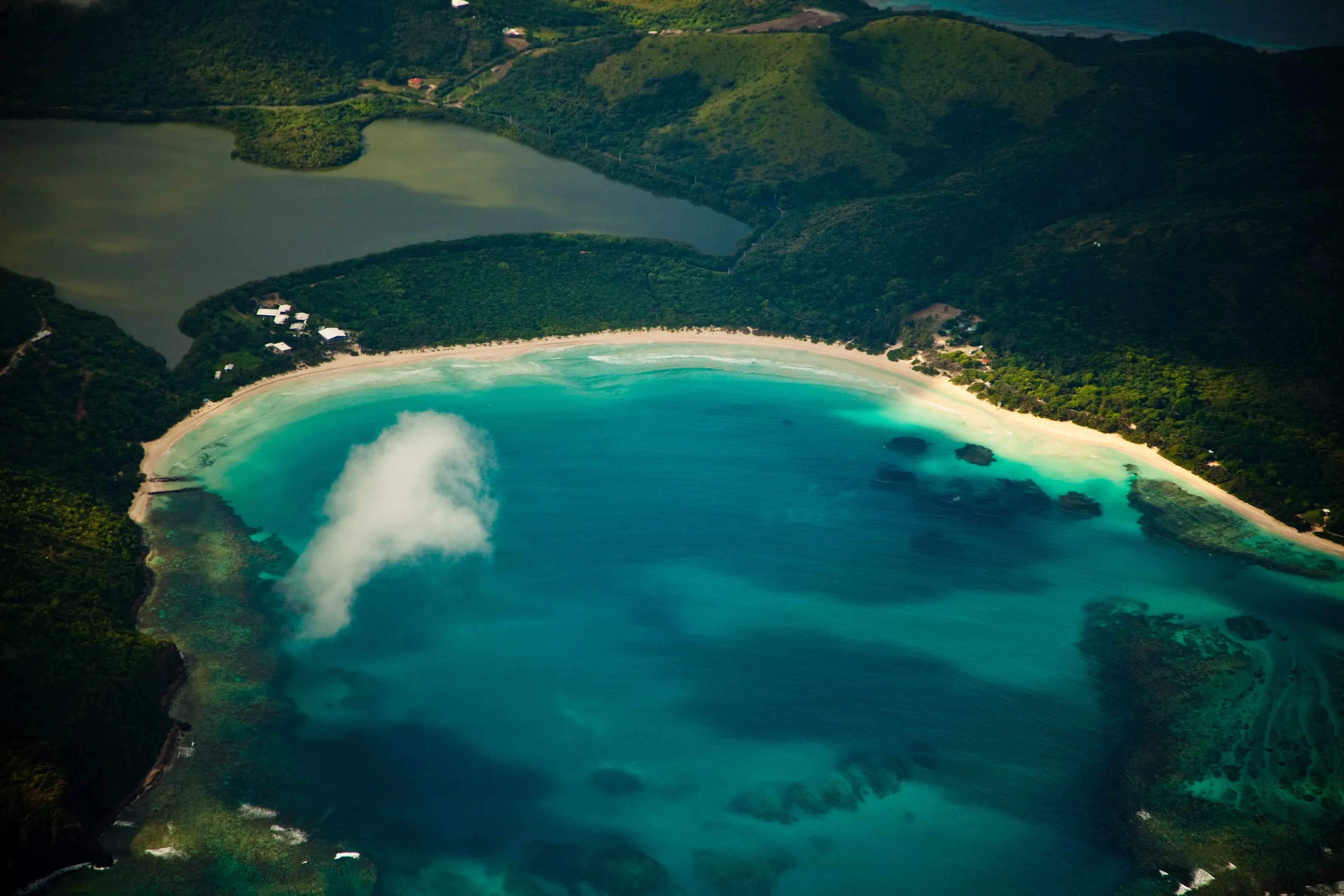
Flamenco turns up on every “best beaches in the world” list, and the photographs are not exaggerated. A mile of white sand in a horseshoe bay, with water that goes from clear to turquoise to deep blue in three distinct bands.
What the photographs leave out is the time of day.
It is two different beaches
Before about eleven and after about three, it is close to what the pictures show — long, quiet, and startling.
Between those, the ferry crowd and the day boats overlap and a mile of sand absorbs it less well than you would think, because everyone clusters in the same middle section near the facilities.
The parking lot fills, the food kiosks back up, and the water in front of the main entrance gets busy. Walk five minutes in either direction and most of that disappears, which almost nobody does.
The tanks
Two rusting amphibious landing tanks sit on the sand at the north end, left from when the US Navy used Culebra as a bombing range until 1975. They are covered in decades of graffiti and repainted constantly.
It is a genuinely strange thing to find on a beach like this, and it is the one detail that tells you what the island’s twentieth century was actually like.
The snorkeling, honestly
Moderate. The rocky ends of the bay hold some life and the middle is sand, which is where everyone swims and then concludes the snorkeling is poor.
If the underwater is the point of your day, Culebra has better — Tamarindo and Carlos Rosario are the names to look up. Flamenco is a beach you look at.
Getting here, and the case for staying
Most people reach Culebra on the Ceiba ferry or by small plane, then take a local taxi or rent a golf cart for the short run to the beach.
Because the beach is at its best outside the middle of the day, and because the ferry schedule brackets exactly that window, day-tripping Flamenco means seeing it at its worst. Culebra’s lodging is limited, but one night converts this from a crowded stop into the beach people describe.